Pomegranates
Pomegranates (Punica granatum) are round fruits with a tough outer skin and many small bright red fleshy seeds held together in the matrix of a white pith.
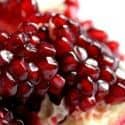
Health benefits of Pomegranates
- Increased Protection from Bacterial and Viral Infections
- Increased Immune Function
- Reduced Cancer Risk
- Reduced Risk of Colon Cancer
- Protection Against Heart Disease
- Regulation of Blood Sugar and Insulin Dependence
- Slowing the progression of AIDS
- Slowing Aging
- DNA Repair and Protection
- Protection Against Dementia
- Alleviation of Cardiovascular Disease
- Alleviation of Hypertension (High Blood Pressure)
- Promoted Eye Health
- Alzheimer's Protection
- Osteoporosis Protection
- Stroke Prevention
- Reduced Risk of Type II Diabetes
- Reduced Frequency of Migraine Headaches
- Alleviation of Premenstrual Syndrome (PMS)
- Antioxidant Protection
- Prevention of Epileptic Seizures
- Alleviation of the Common Cold
- Prevention of Alopecia (Spot Baldness)
- Alleviation of Inflammation
Some of these health benefits come from nutrients concentrated in this food, and may not be effects of the food itself.
How to choose Pomegranates
The trick to picking a good pomegranate is to be sure you are not picking a dry pomegranate. Avoid pomegranates that have indentions, and check the top portion of the stem to be sure it doesn't look dry and withered.
How to store Pomegranates
Keep pomegranates in a cool humid environment like your fridge. To create this you can keep them in a plastic bag with a wet paper towel. Kept this way pomegranates can last for 2-3 months.
Climate and origin
Pomegranates originated somewhere between the south of Iran to the Himalayas in Northern India. Favoring sub-tropical climates, pomegranates do well in zones 8-10, with some varieties able to survive in zone 7. (Zones are for the U.S.)
Taste
Pomegranates have lightly fragrant sweet taste and a crisp juicy texture. Due to the amount of seeds, pomegranates can be a bit of a challenge to eat.
Miscellaneous information
Pomegranates are seen as a holy symbol in the Abrahamic religions, and can often be seen depicted in iconic works of art.
Nutrition facts
| Nutrition Facts | |||
|---|---|---|---|
| Serving Size | |||
| 100 grams (100g) | |||
| Calories | 83 | ||
| % Daily Value * | |||
| Total Fat 1.2g | 2% | ||
| Saturated Fat 0.12g | 1% | ||
| Trans Fat 0g | |||
| Cholesterol 0mg | 0% | ||
| Sodium 3mg | 0% | ||
| Total Carbohydrate 18.7g | 7% | ||
| Dietary Fiber 4g | 14% | ||
| Total Sugars 13.7g | 27% | ||
| Includes --g Added Sugars | --% | ||
| Protein 1.7g | 3% | ||
| Vitamin C 10.2mg | 11% | ||
| Vitamin D 0mcg | 0% | ||
| Iron 0.3mg | 2% | ||
| Calcium 10mg | 1% | ||
| Potassium 236mg | 5% | ||
| Phosphorus 36mg | 3% | ||
| *The % Daily Value (DV) tells you how much a nutrient in a serving of food contributes to a daily diet. 2,000 calories a day is used for general nutrition advice. | |||