Lychees
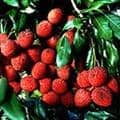
Lychees (Litchi chinensis) aka: Litchi, Laichi, and Lichu are small oval shaped fruits with a thin leather-like outer skin, and a white inner flesh surrounding a single large brown seed.
Health benefits of Lychees
- Increased Protection from Bacterial and Viral Infections
- Increased Immune Function
- Reduced Cancer Risk
- Reduced Risk of Colon Cancer
- Protection Against Heart Disease
- Regulation of Blood Sugar and Insulin Dependence
- Slowing the progression of AIDS
- Slowing Aging
- DNA Repair and Protection
- Protection Against Dementia
- Alleviation of Cardiovascular Disease
- Alleviation of Hypertension (High Blood Pressure)
- Promoted Eye Health
- Alzheimer's Protection
- Osteoporosis Protection
- Stroke Prevention
- Reduced Risk of Type II Diabetes
- Reduced Frequency of Migraine Headaches
- Alleviation of Premenstrual Syndrome (PMS)
- Antioxidant Protection
- Prevention of Epileptic Seizures
- Alleviation of the Common Cold
- Prevention of Alopecia (Spot Baldness)
- Alleviation of Inflammation
Some of these health benefits come from nutrients concentrated in this food, and may not be effects of the food itself.
How to choose Lychees
Lychees are more likely to be fresh when they are sold still attached to the stem. It can be difficult to spot lychees which are over ripe, so it is best to ask for a sample. If you see a slimy mucous when you peel back the skin, then the lychees are too ripe and should not be bought. Also, avoid any lychees with indentions as this is a sign of rotting.
How to store Lychees
Keep lychees on their stem as long as possible and store them in the fridge. Lychees will only keep about a week, so they should be eaten quickly.
Climate and origin
Lychees originated in Southern China and thrive in tropical climates. (Zone 10 in the U.S.)
Taste
Lychees have a very sweet fragrant taste with a tender texture.
Miscellaneous information
In China lychees are made into a sweet dessert wine that is served ice-cold during summer.
Similar tasting produce
Nutrition facts
| Nutrition Facts | |||
|---|---|---|---|
| Serving Size | |||
| 100 grams (100g) | |||
| Calories | 66 | ||
| % Daily Value * | |||
| Total Fat 0.44g | 1% | ||
| Saturated Fat 0.1g | 0% | ||
| Trans Fat 0g | |||
| Cholesterol 0mg | 0% | ||
| Sodium 1mg | 0% | ||
| Total Carbohydrate 16.5g | 6% | ||
| Dietary Fiber 1.3g | 5% | ||
| Total Sugars 15.2g | 30% | ||
| Includes --g Added Sugars | --% | ||
| Protein 0.83g | 2% | ||
| Vitamin C 71.5mg | 79% | ||
| Vitamin D 0mcg | 0% | ||
| Iron 0.31mg | 2% | ||
| Calcium 5mg | 0% | ||
| Potassium 171mg | 4% | ||
| Phosphorus 31mg | 2% | ||
| *The % Daily Value (DV) tells you how much a nutrient in a serving of food contributes to a daily diet. 2,000 calories a day is used for general nutrition advice. | |||